What does ethical breeding really mean?
Today, animal welfare and sustainability are increasingly central elements in food choices.
Ethical pig farming, based on principles of organic farming and respect for the animals’ natural rhythms, represents a production model oriented towards quality and transparency.
This approach allows us to ensure a controlled supply chain, attentive to the environment and animal welfare, enhancing responsible organic production.
For years, Salumificio Pedrazzoli has applied rigorous organic farming standards, based on animal welfare, natural nutrition, and sustainability, to offer organic cured meats obtained from a controlled and responsible supply chain.
What is ethical breeding
Ethical livestock farming is a production system that puts animal welfare, respect for the environment, and sustainability at the center. It differs from intensive farming because it guarantees more natural living conditions for animals, reduces environmental impact, and enhances a more transparent and responsible supply chain.
This approach is based on respect for the physiological and ethological needs of animals and on breeding practices that promote quality, food safety and sustainability.
The three types of farming: intensive, extensive, and organic.
Farming systems are mainly distinguished by the animals’ living conditions, space management, and feeding practices. The three main models are intensive, extensive, and organic farming.
Intensive farming
A system focused on maximizing production. Animals are raised in confined spaces, fed with industrial feed, and the environmental impact is greater.
Extensive farming
This system provides large open spaces and greater freedom of movement for the animals. Feeding is more natural, and the environmental impact is lower than in intensive farming.
Organic and ethical farming
This represents an evolution of extensive farming. Animals have access to the outdoors, are fed with organic feed, and are raised in a way that respects their natural rhythms.
The five freedoms of animal welfare
The concept of ethical farming is based on the Five Freedoms of animal welfare, defined in the 1965 Brambell Report, which is still a key reference point for responsible farming today:
- freedom from hunger and thirst
- freedom from discomfort
- freedom from pain and disease
- freedom to express natural behaviours
- freedom from fear and stress
These principles provide the foundation for defining farming standards that respect both animals and the environment.
Why ethical farming is important today
In recent years, attention to the origin of food and animal welfare has grown significantly. More and more consumers want to know how animals are raised, which practices are adopted, and what impact production has on the environment.
Ethical farming represents a concrete response to these needs, because it places respect for the animals’ natural rhythms, stress reduction, and more balanced living conditions at the centre.
This approach not only helps improve animal welfare, but also promotes more sustainable and transparent production. The use of organic feed, reduced use of antibiotics, and access to adequate space all contribute to building a controlled and responsible supply chain, in which quality and sustainability go hand in hand.
Choosing ethical farming therefore means supporting a production model that looks to the future: greater attention to the environment, respect for animals, and high-quality raw materials. It is a path that today represents one of the key elements of organic production focused on sustainability and transparency.
The principles of ethical farming today
Animal welfare
Animals have adequate space to move freely, avoiding cages or cramped conditions.
They are fed natural food, often organic and GMO-free.
The routine use of antibiotics and growth hormones is avoided.
Animals are treated with respect and raised according to their natural rhythms.
Environmental sustainability
Environmental impact is limited by reducing CO₂ emissions and the consumption of natural resources.
Regenerative farming practices are adopted to preserve soil and biodiversity.
Excess waste and groundwater pollution are avoided.
Transparency and traceability
Consumers can know the origin of the product and how the animals have been treated. Companies often work with organic and animal welfare certifications.
Examples of ethical farming systems
- Organic farms that comply with strict animal welfare standards
- Free-range farms where animals live outdoors
- Short supply chain farming systems that avoid long-distance animal transport
- Permaculture and agroforestry projects that integrate farming into sustainable ecosystems
The organic standards of Salumificio Pedrazzoli
Salumificio Pedrazzoli applies rigorous organic and ethical farming standards, with the aim of ensuring animal welfare, environmental sustainability, and the quality of the final product.
The farming system is closely connected to the land and to respect for natural cycles, in contrast to intensive models. This approach makes it possible to enhance a controlled organic supply chain focused on quality.
Animal welfare
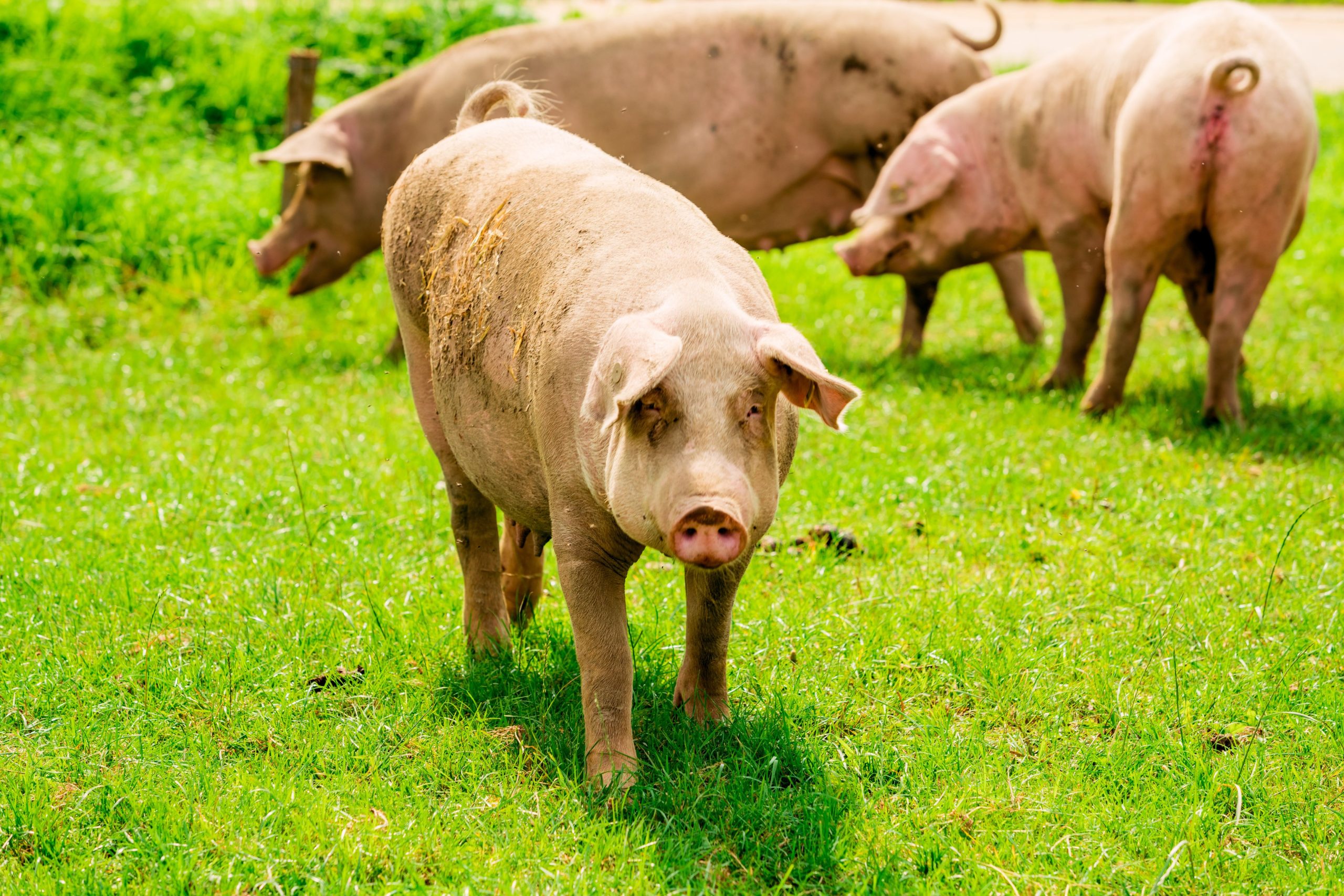
The animals have adequate space to move freely and root around, with access to the outdoors. The environments are designed to ensure comfort and protection from weather conditions.
The presence of straw bedding supports the pigs’ welfare and natural behaviour.
Natural organic feed
The animals are fed with feed sourced from organic farming.
GMOs, preventive antibiotics, and growth hormones are not allowed.
This approach ensures a controlled supply chain that is consistent with the principles of organic farming.
Environmental sustainability
The farming practices adopted aim to reduce environmental impact, preserve the soil, and protect biodiversity.
The responsible management of resources and waste is a central element of the organic model.
The Good Pig recognition and the commitment to animal welfare
In 2016, Salumificio Pedrazzoli received the Good Pig Award for its commitment to improving the welfare of the pigs it raises. This recognition highlights companies that adopt ethical, sustainable, and animal-friendly practices.
The Good Pig Award is a recognition given to agricultural and livestock businesses that stand out for virtuous, sustainable farming practices and for their strong focus on animal welfare, particularly that of pigs.
Today, this type of award represents significant added value for companies, especially for businesses such as Salumificio Pedrazzoli, which are committed to sustainable quality and to a rigorous respect for animal welfare.