When we taste a cured meat, we often think of the recipe, the curing process, the seasoning, or the skill of the butcher. All true, but the flavor begins long before the processing: it begins on the farm, with the quality of the raw materials, the animal’s diet, and the consistency of the supply chain.
Before salt, spices, and maturation time, there is an invisible but fundamental ingredient: what the animal has eaten.
This is why talking about animal nutrition and the taste of cured meats means getting to the source of flavor. It means understanding why a meat can be more balanced, why a fat can be more tender and aromatic, why a slice can tell so much more than a recipe.
This is particularly true for raw ham, cured meats, and organic cured meats, products where time, fat, marbling, and meat quality become crucial elements in creating aroma, melt-in-your-mouth texture, and persistence.
The taste of a cured meat does not only come from the processing
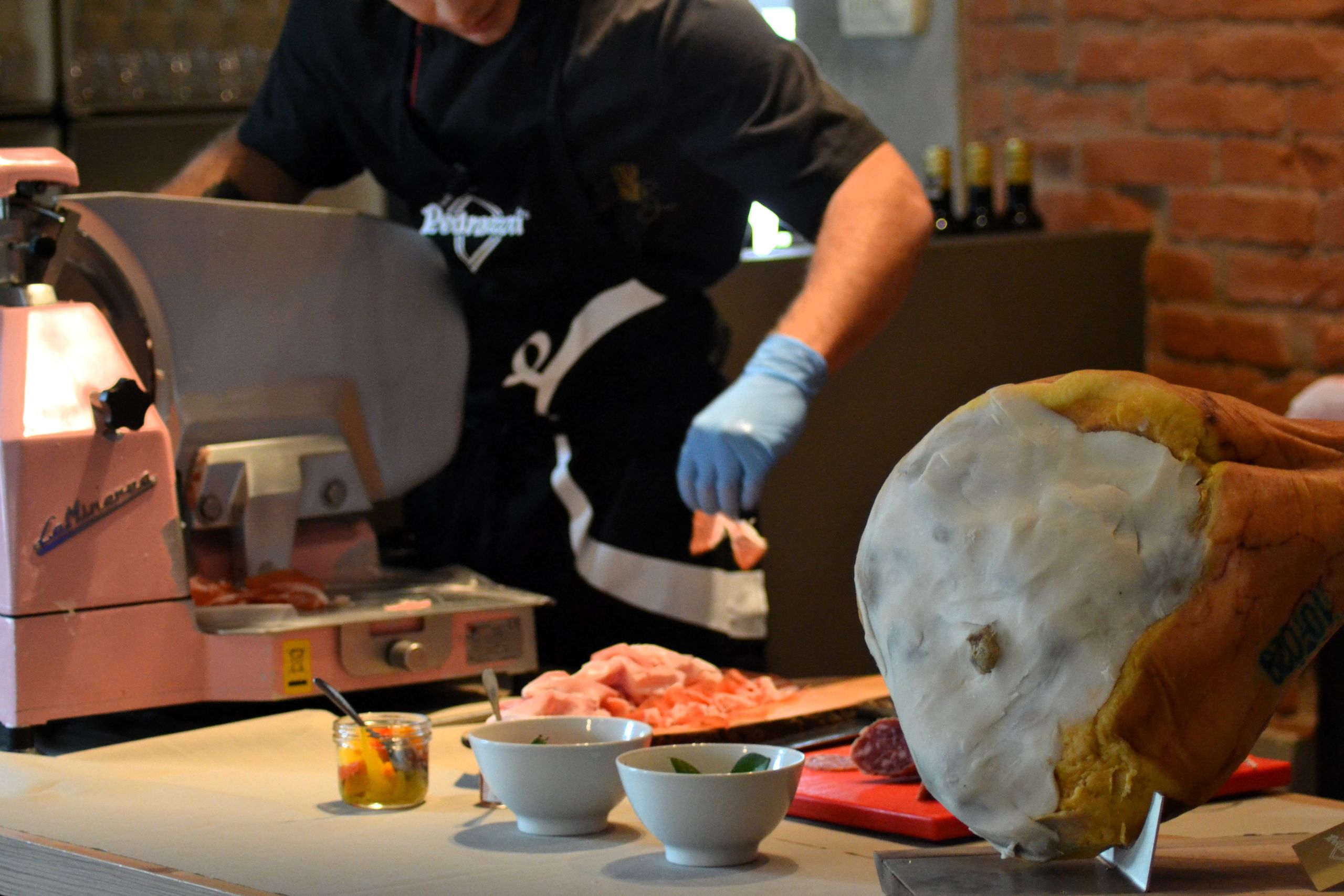
A quality cured meat is never the result of a single action. Processing is crucial: the choice of cut, salting, cooking, curing, the balance of flavors, and time are all crucial.
But no process can replace the quality of the raw material.
The meat from which a cured meat is born is the result of the animal’s life: its diet, its well-being, its growth period, the environment in which it lives, and the supply chain that accompanies it.
For this reason, when we talk about the quality of cured meats , we should not only look at the final slice, but at everything that comes before: breeding , feeding, supply chain and respect for the raw materials.
Why animal feed affects the taste of cured meats
A pig’s diet affects the quality of the meat and, in particular, the composition of the fat. This is crucial, because in cured meats, fat isn’t just a visible part of the slice. It’s a fundamental component of flavor.
Fat contributes to:
- softness
- meltability
- perfume
- roundness
- aromatic persistence
- slice balance
A meat may be technically correct, but if the fat isn’t balanced, the cured meat will be less palatable. On the other hand, a balanced fat doesn’t overpower the flavor: it complements it.
This is why we can say that fat tells the animal’s diet .
Not in an immediate or simplistic way, but through a series of characteristics that the consumer perceives when biting into it: a softer slice, a cleaner aroma, a more balanced flavor, a greater harmony between lean and fatty parts.
Pigs are monogastric: what does this mean for flavor?
Pigs are monogastric animals , meaning that, unlike ruminants, the composition of their diet can significantly impact their body fat profile. In other words, what a pig eats contributes to the quality of the meat and fat that will then become the raw material for cured meats.
The choice of cereals, protein sources, forages and raw materials used in animal feed can affect the composition of fatty acids and, consequently, very specific aspects:
- fat consistency
- firmness of the meat
- aromatic balance
- quality of seasoning
- transformation yield
- final taste perception
This is why nutrition isn’t just a technical detail reserved for animal husbandry. It’s an essential component of gastronomic quality.
The role of fat in cured meats
In cured meats, fat plays a much more important role than we often think. It’s not just a nutritional or visual component. It’s one of the elements that makes a slice of meat enjoyable, balanced, and recognizable.
A quality fat contributes to the melt-in-your-mouth sensation, that soft, enveloping sensation you experience on the palate. It helps distribute aromas, enhances flavor persistence, and rounds out the sensory profile.
This is especially true for cured meats like prosciutto crudo, where time slowly transforms proteins and fats, developing complex aromas and flavors.
In cooked cured meats , such as cooked ham, heat treatment contributes to the aromatic development and final tenderness. Even in this case, however, the result depends on the quality of the raw material.
However, not all fats in cured meats are created equal. In recent decades, thanks to advances in breeding techniques, pig feed, and processing, the quality of the fat content in Italian cured meats has also changed. Today, in a quality cured meat, fat shouldn’t be considered merely as “fatty portion,” but as a key component in flavor, texture, and curing.
A major component of pork fat is oleic acid , a monounsaturated fat also found in extra virgin olive oil. In Italian cured meats and prosciutto crudo, oleic acid represents a significant portion of the lipid profile: a detail that helps interpret the fat not only as a visible presence in the slice, but as part of its sensorial quality.
It is useful to distinguish between infiltration grease and covering grease .
- Infiltrating fat , or intramuscular fat, is the fat distributed within muscle fibers. It’s the fat that contributes to marbling and makes products like prosciutto, coppa, and pancetta sweeter, softer, and more melt-in-your-mouth. When well-distributed, it doesn’t overpower the flavor: it complements it.
- Cover fat is the outer layer that envelops some cured meats, such as prosciutto crudo. During curing, it plays an important role: it protects the meat, helps regulate moisture loss, and modulates salt absorption. This fat, therefore, is not just a component to be removed, but a technical and sensorial element of the product.
For this reason, in a quality cured meat, fat shouldn’t be evaluated solely in terms of quantity, but above all in terms of balance, distribution, and function. It’s one of the keys to flavor: it reflects the animal’s diet, supports maturation, and makes the slice softer, more harmonious, and more persistent.
Marbling: When Fat Becomes Flavor
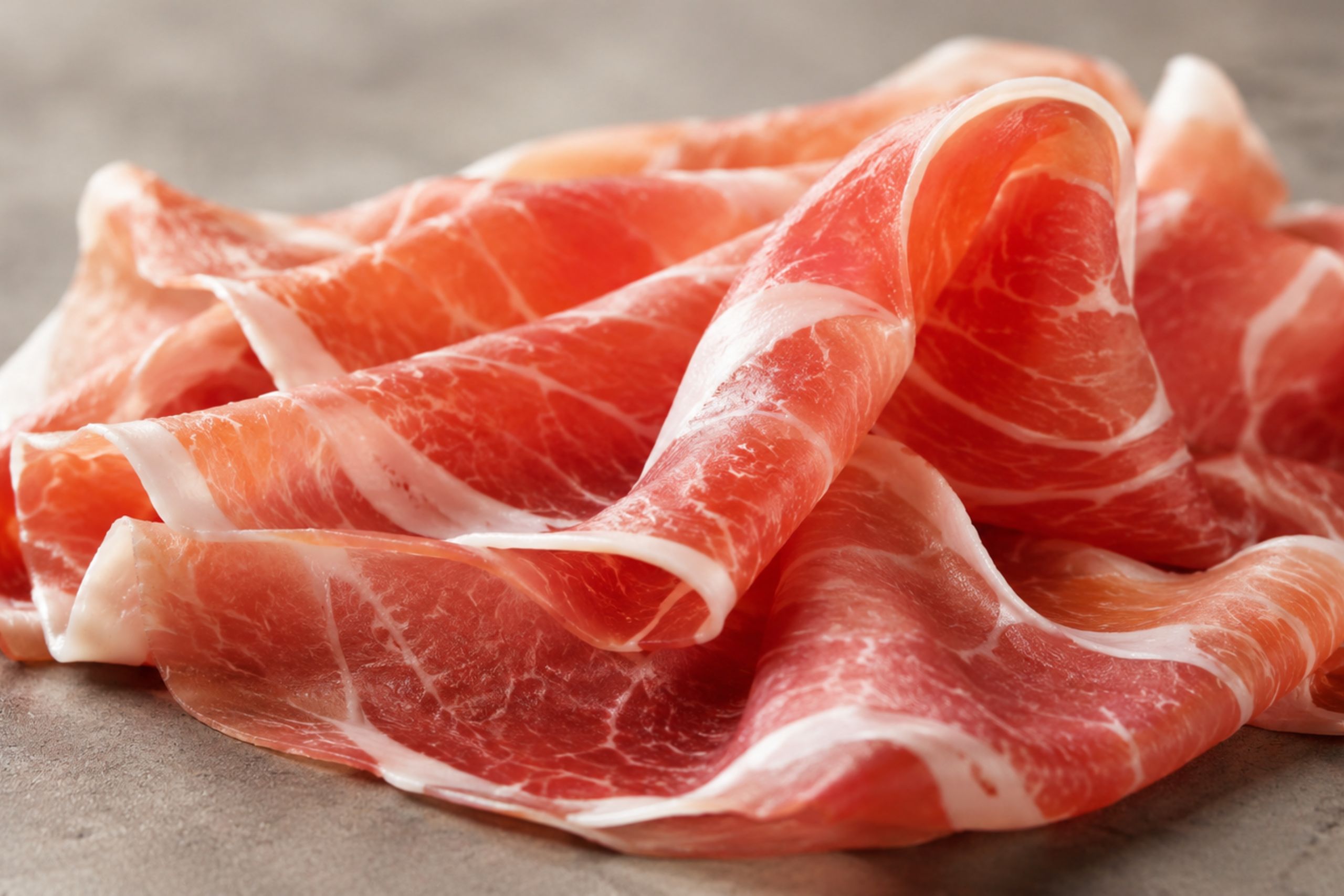
Marbling is the presence of small veins of fat within the muscle tissue. It should not be confused with external or covering fat: it is a thinner fat, distributed throughout the lean part of the meat .
In meat intended for processing, marbling can affect three fundamental aspects:
- softness , because the intramuscular fat makes the fibre more pleasant to bite;
- juiciness , because it helps avoid a too dry sensation;
- aromatic depth , because fat is one of the main vehicles of flavor.
In cured meats, this balance becomes even more important. Good marbling doesn’t simply mean “more fat,” but better fat distribution .
It’s what makes a slice more harmonious, less dry, rounder on the palate.
Animal nutrition can also contribute to this balance, along with other factors such as genetics, age, growth rate, welfare, and farm management.
This is why marbling isn’t just an aesthetic detail. It’s one of the elements that allows the meat to become a more balanced and recognizable cured meat.
What is “umami” in cured meats: the deep flavor of meat
Umami is one of the five basic tastes, along with sweet, salty, sour, and bitter. It’s often described as a full, deep , and persistent flavor: that savory, rounded sensation that lingers on the palate without simply being “salty.”
In cured meats, especially cured ones like prosciutto crudo , umami can develop during maturation, when the meat proteins transform and release compounds that contribute to natural flavor, aromatic depth, and persistence of taste.
This is why umami is not an added flavor, but the result of a process: meat quality, fat, time, processing, and supply chain.
Animal breeding and feeding in Pedrazzoli cured meats
To truly understand how much animal feed can affect the flavor of a cured meat, it’s helpful to look at specific production processes.
In the Pedrazzoli world, the link between breeding , nutrition, meat quality and cured meats is not an abstract concept.
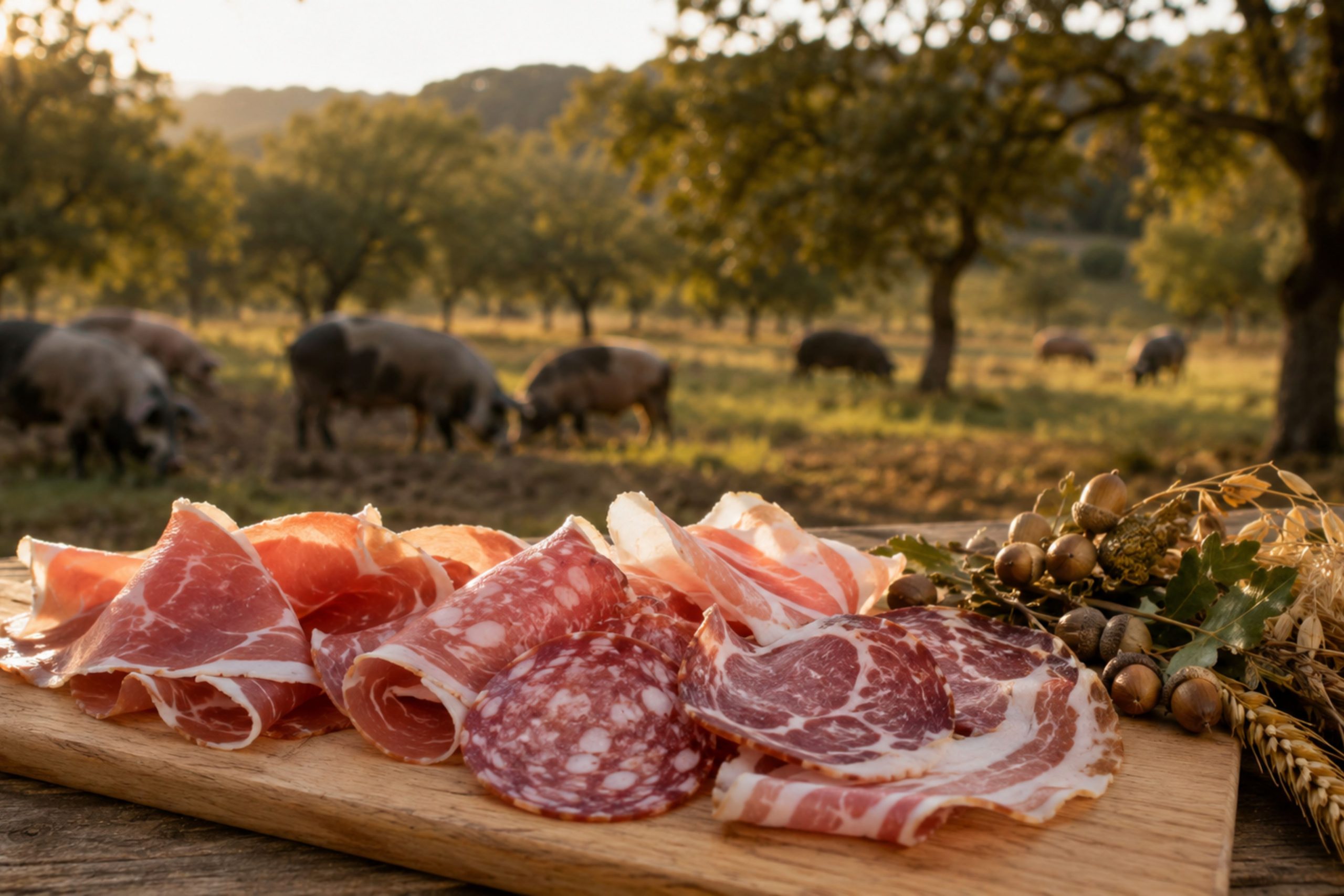
On one hand, there’s semi-wild farming , which finds expression both in the organic approach and in the valorization of the black pig. On the other, there’s the bellota Iberian pig of the Montanera Line, where the acorn-based diet becomes one of the most recognizable elements of flavor.
1. Semi-wild farming: organic, black pig and quality of raw materials
The first approach involves semi-wild farming, a model in which exercise, environment, nutrition, and animal welfare contribute to the quality of the meat.
With its new company-owned feed mill , Salumificio Pedrazzoli strengthens its control over its supply chain, intervening directly on animal feed.
The company can customize feed recipes, selecting ingredients that provide animals with healthy, balanced nutrition consistent with organic methods. A significant portion of these ingredients come from the Pedrazzoli family’s own crops, creating a direct link between agriculture, livestock farming, meat quality, and the flavor of the cured meat.
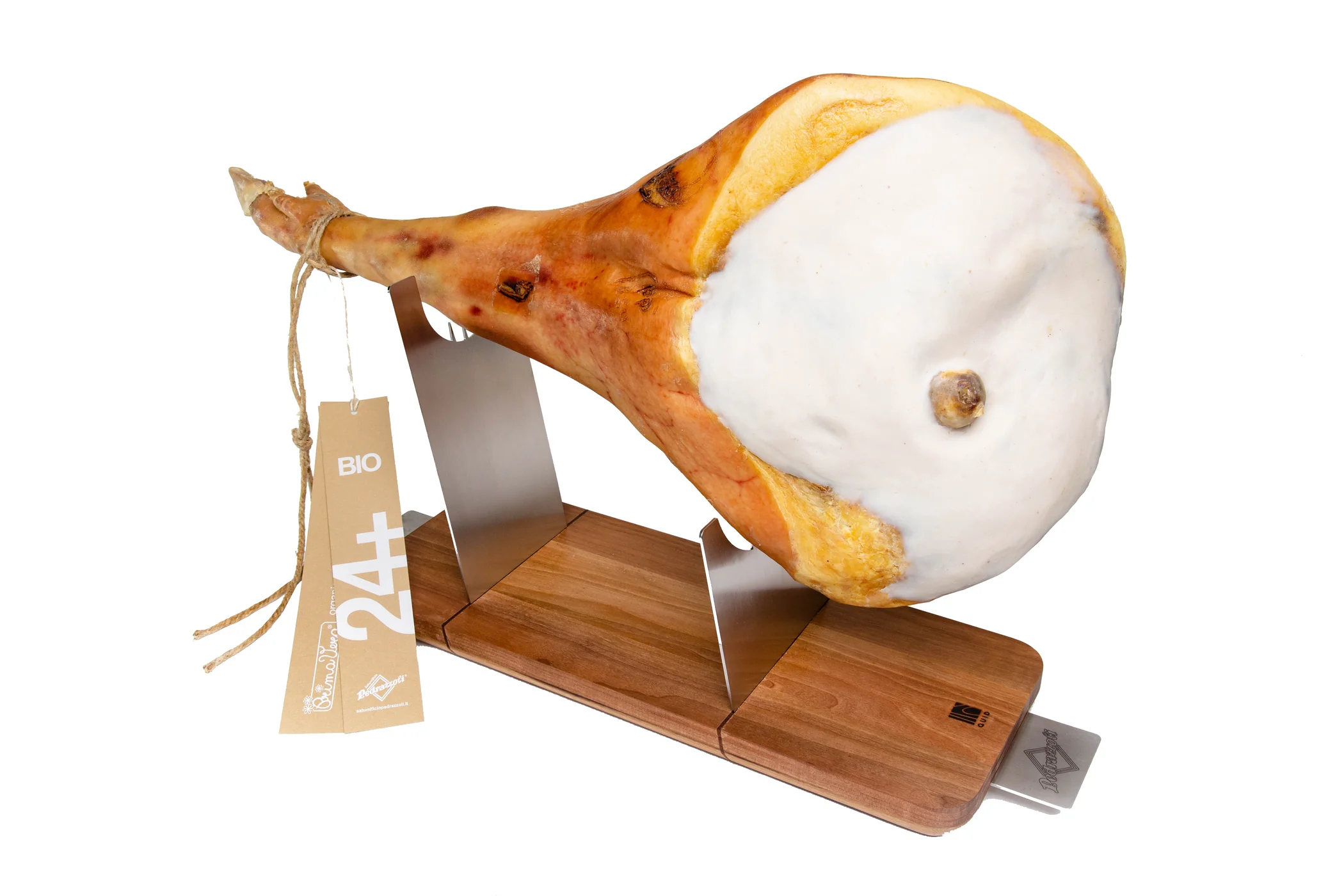
This path includes the Brado24+Raw Ham from the PrimaVera Bio line .
An animal raised in a more natural environment, with a diet consistent with organic methods and respectful growth times, develops a more recognizable and balanced meat, with fat capable of accompanying the maturation process.
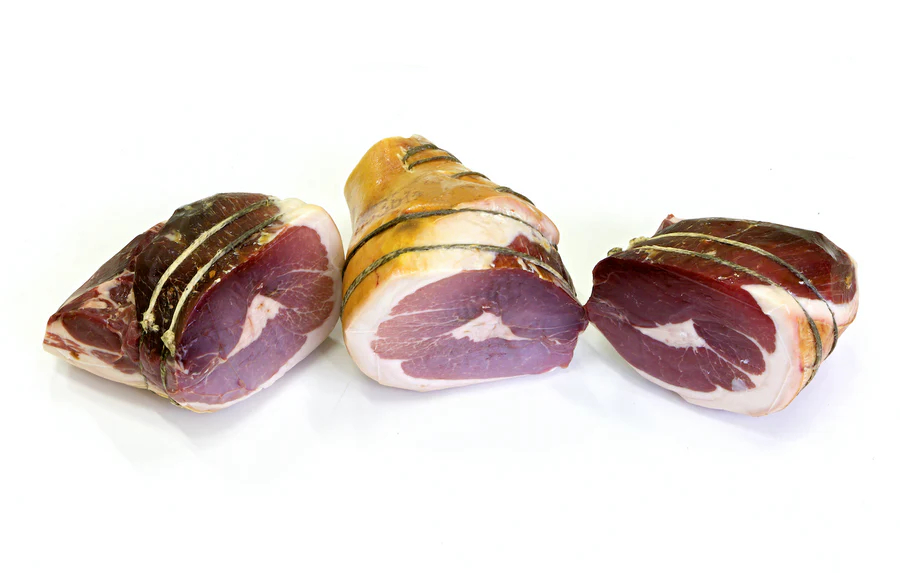
The same principle is found in the path linked to the semi-wild-raised black pig , from which the premium cured meats of the Q+ Line are born , such as Salame Padus and Il Poggio raw ham .
Here, the central theme is once again the relationship between environment, movement, nutrition, and meat quality. Semi-wild farming allows for growth that is more closely tied to the natural environment and less standardized management: this can be reflected in the meat’s structure, fat distribution, and the aromatic depth of the processed products.
2. Bellota Iberian Pig: the Pedrazzoli Montanera Line
The second path is perhaps the most immediate for understanding the relationship between animal nutrition and flavour: the Bellota Iberian pig from the Pedrazzoli Montanera line .
In the montanera world, the Iberian pig lives freely and feeds primarily on acorns. This diet is one of the most important elements in shaping the flavor of Iberian meat.
Acorns have a major impact on the fat: they make it more aromatic, soft, persistent, and recognizable on the palate.
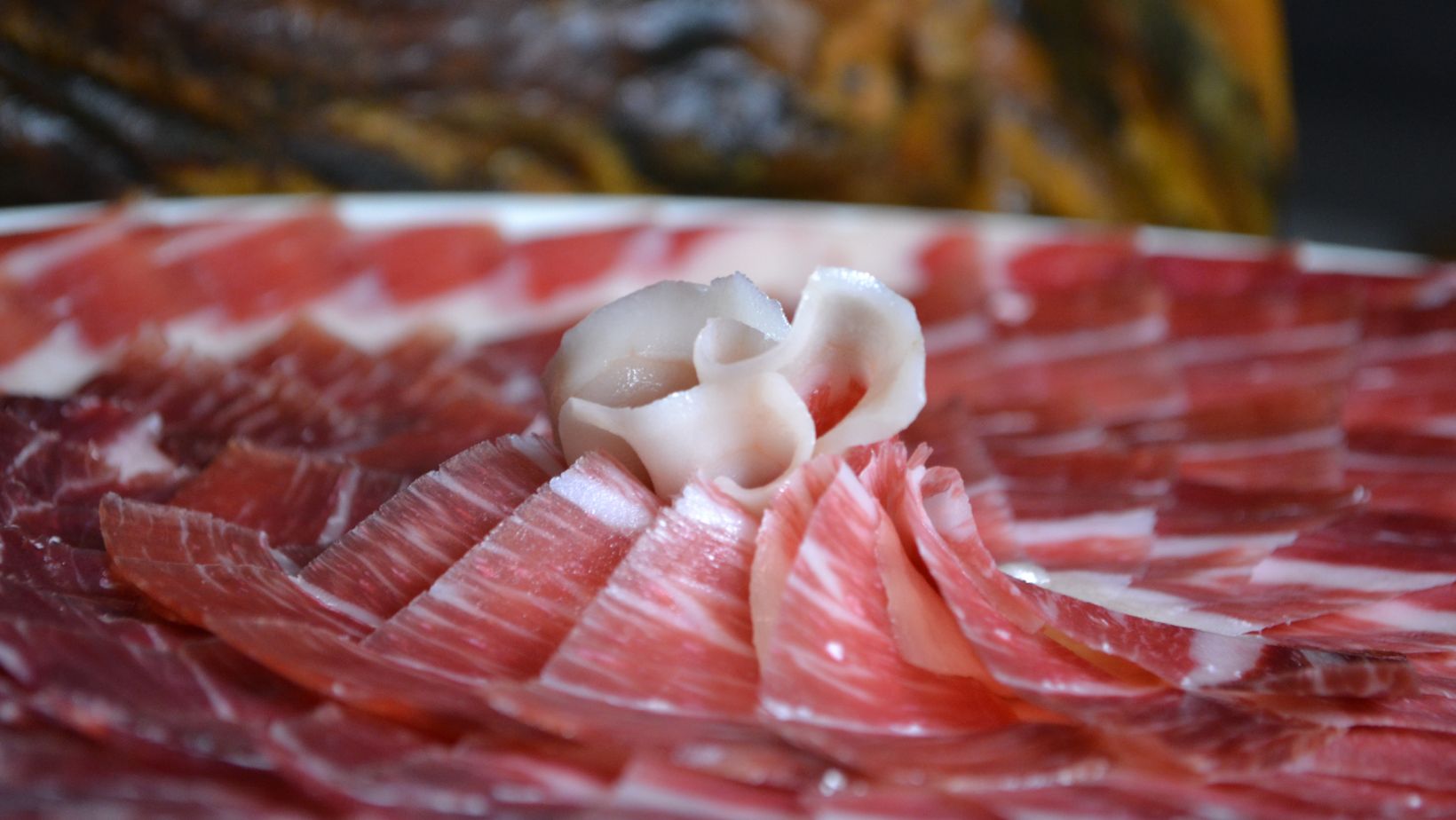
This is where the concept “fat tells the animal’s diet” becomes particularly evident.
In the cured meats of the Montanera Line , the taste does not come only from the seasoning or from the Iberian tradition: it comes from the relationship between animal, environment and nutrition.
The result is an intense, elegant, and profound organoleptic profile: a meat where the fat doesn’t cover, but complements; it doesn’t weigh down, but prolongs the flavor.
Organic Pig Feeding: What It Really Means
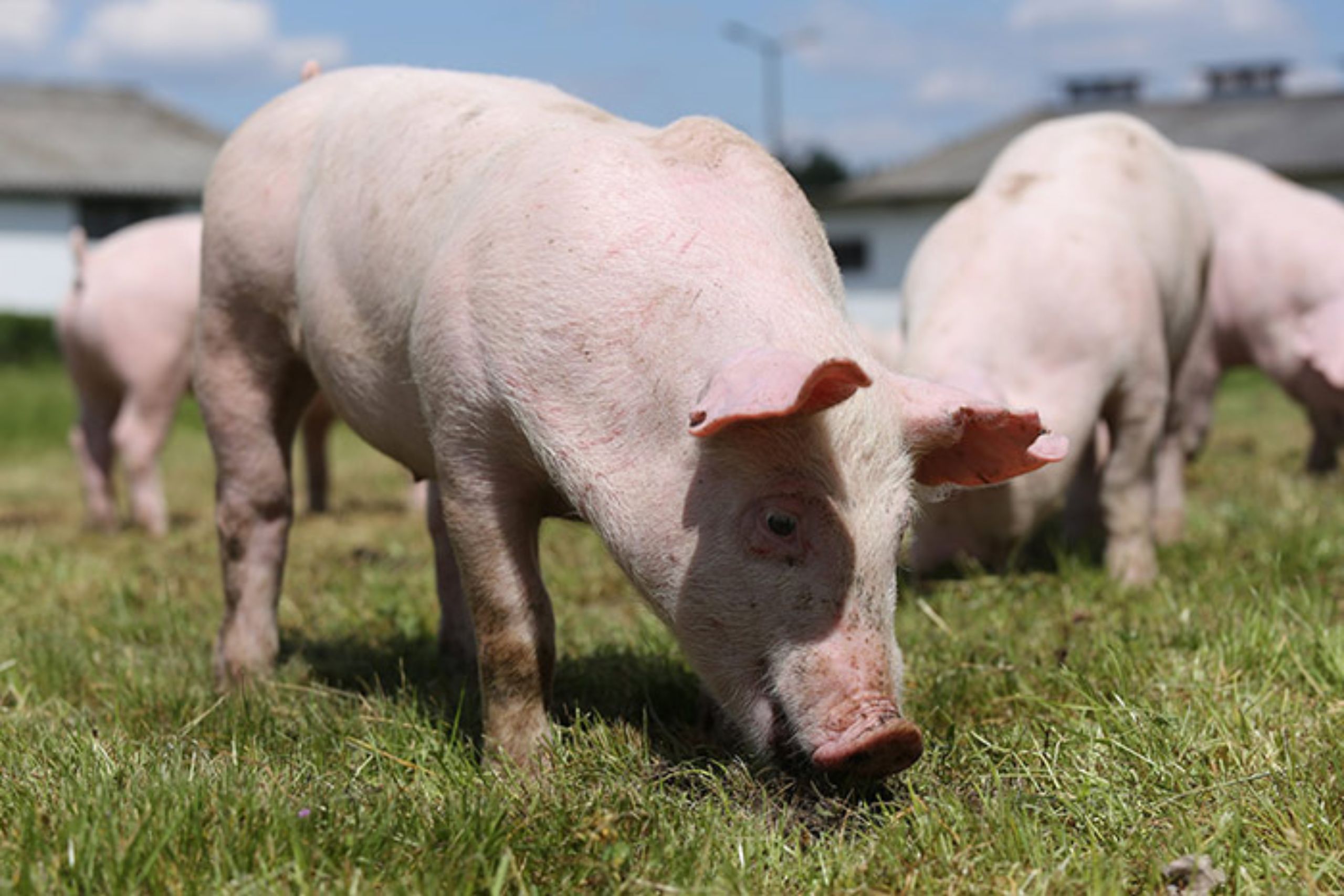
In organic farming, animal feed follows precise rules and is part of a broader supply chain vision. Organic pig feed means using feed sourced from organic farming, paying attention to the quality of raw materials, avoiding GMOs, and adhering to production standards geared toward animal welfare.
Organic isn’t just a certification for the finished product. It’s a process that encompasses the entire process, and in the case of organic cured meats, this means that quality comes from a more controlled and consistent supply chain:
- from the choice of food;
- from the care of breeding;
- from respecting growth times;
- from the selection of raw materials;
- from the transformation into a salami factory;
- until the slice arrives at the table.
Organic products don’t guarantee taste by themselves, but they create the conditions for that taste to emerge from a more readily available, controlled raw material that’s more consistent with the product’s identity.
Conclusion: the taste begins before the slice
The taste of a cured meat is never a final detail, but the result of a story that begins long before processing: in the breeding, in the animal’s diet, in the quality of the meat, and in the consistency of the supply chain.
This is why animal feed truly changes the flavor, not because it “flavors” the meat in a simple or immediate way, but because it helps define what will become the basis of the cured meat: meat structure, fat balance, marbling, melt-in-your-mouth feel, and aromatic depth.
The taste comes before the cured meat and in Pedrazzoli cured meats, this origin becomes part of the flavor.
Further information
- Ethical farming: Salumificio Pedrazzoli’s organic standards
- Controlled supply chain for organic cured meats: what it really means
- The Master Norcini: the art of seasoning in the Q+ Line
- Vertical of raw ham: what it is and how to taste it