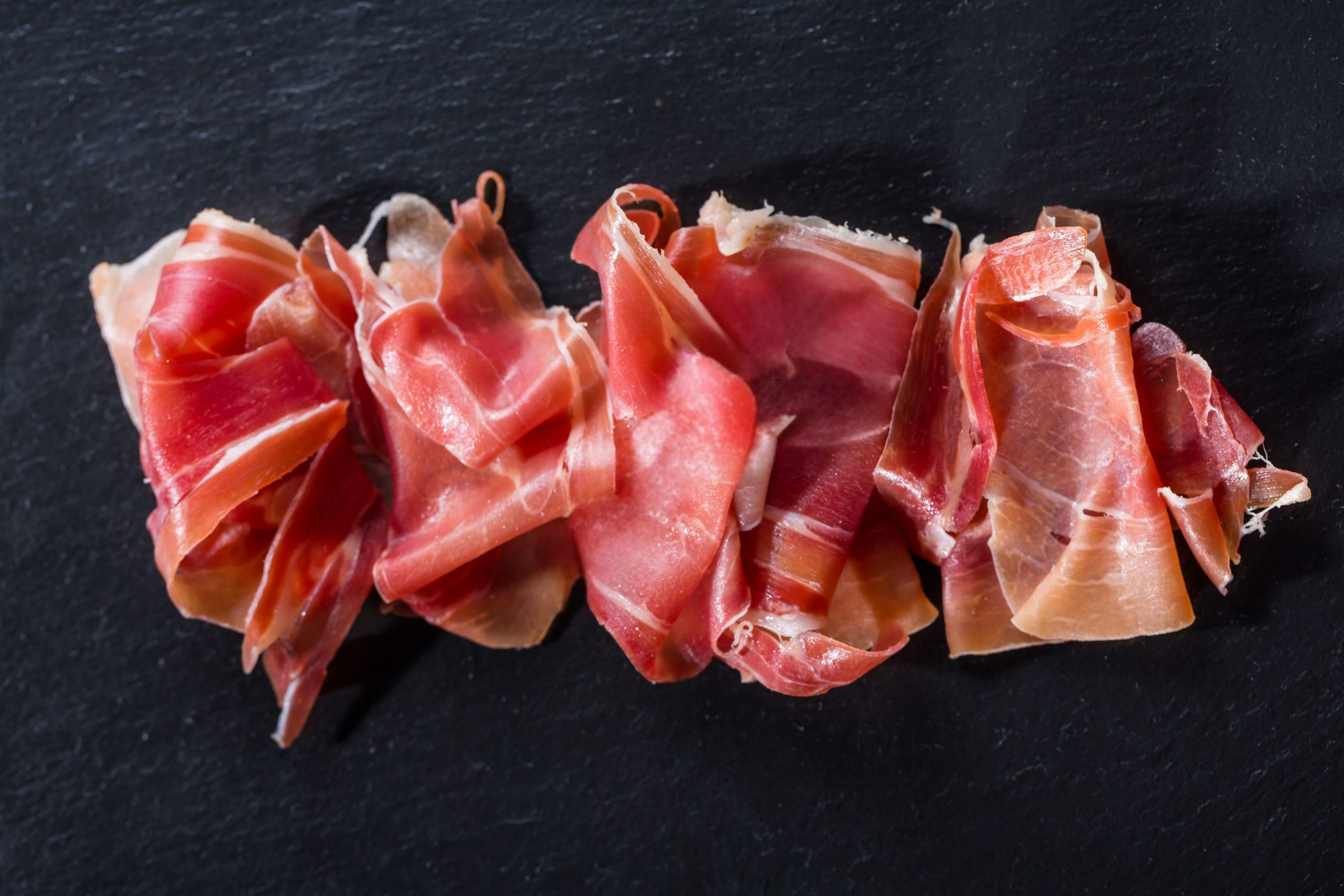
In the language of wine, a vertical tasting is a comparison between different expressions of the same product over time.
Applied to the world of charcuterie, this approach becomes a fascinating way to interpret Prosciutto Crudo: this is how a vertical tasting of cured hams is born, a tasting journey that compares different ageing periods in order to understand their evolution, character and identity.
It is not simply about tasting three hams. The meaning of a vertical tasting goes deeper: it is about observing how time acts on Prosciutto Crudo, how it changes its sensory profile, texture and persistence on the palate, transforming each slice into a different story.
Vertical Tasting of Prosciutto Crudo: Meaning and Origin of the Term
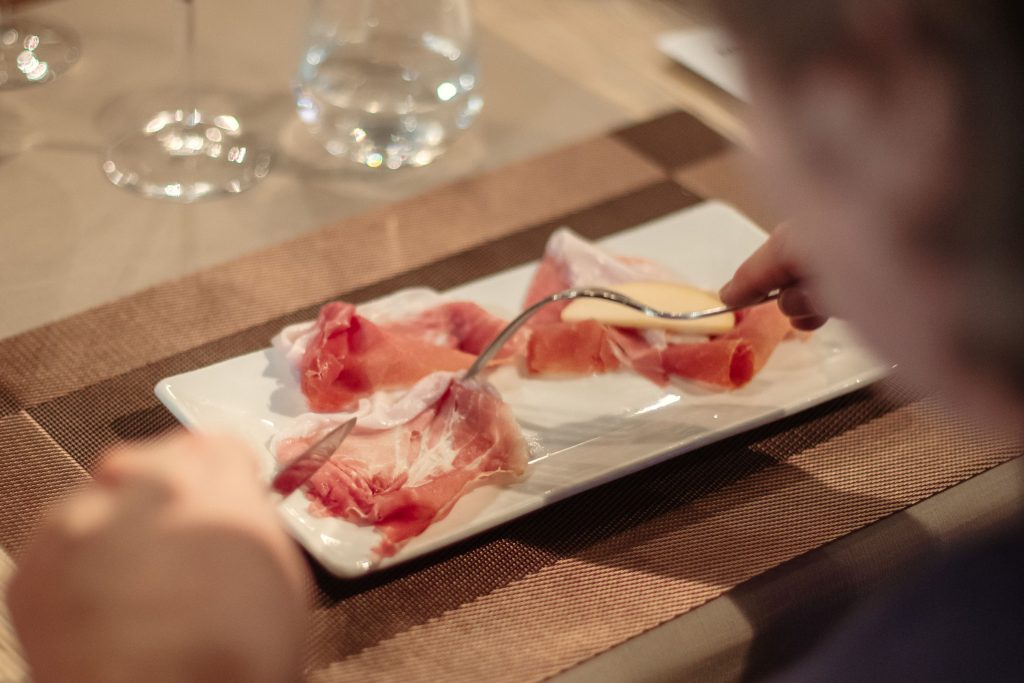
A vertical tasting of Prosciutto Crudo is a guided tasting experience that presents the same ham in three different ageing periods, usually in increasing order.
The aim is to highlight what time slowly builds:
- olfactory nuances
- taste balance
- structure and depth
The term “vertical” comes from the vocabulary of wine, where it is used to describe the tasting of several vintages from the same producer or the same label.
In the case of Prosciutto Crudo, the idea remains the same: to follow an evolutionary path and appreciate the differences. The product changes, but the principle does not: it is about observing how an initial identity transforms over time, maintaining continuity while gaining new nuances.
Why Taste Prosciutto Crudo “Vertically”
A vertical tasting of cured hams is designed to train both the eye and the palate. It is an experience that invites us to slow down and taste more carefully, going beyond the idea of Prosciutto Crudo as a product that is “always the same”.
Each ageing period tells a different stage of maturation.
- The youngest ageing period usually expresses greater freshness and immediacy.
- The intermediate ageing period may offer greater harmony between sweetness, savouriness and aromatic intensity.
- The longest ageing period, on the other hand, often brings intensity, depth and a more complex persistence.
A vertical tasting therefore makes it possible to clearly understand one essential aspect: ageing is not simply a matter of duration, but of transformation.
Time does not merely add months. It shapes the ham, changes its perception and refines its character.
Time as an Invisible Ingredient
When speaking about Prosciutto Crudo, time is one of the most important yet least visible elements. It cannot be seen like an ingredient, but it can be perceived in every detail of the tasting experience.
Time affects the texture of the slice, its melt-in-the-mouth quality, the complexity of its aroma, the breadth of its flavour and the length of its aromatic persistence.
This is why a vertical tasting of cured hams is also a way to make tangible what usually remains implicit: the silent work of ageing.
In this sense, tasting three different maturation periods also means approaching the culture of Prosciutto Crudo with greater awareness. It becomes clear that behind the product there is a balance built between raw material, processing, environment and time.
In the end, there will never be an absolute answer to the question: “Which one is the best?”
This is precisely one of the most interesting aspects of a vertical tasting: it shows that taste is not a ranking, but a path of perception. Each ageing period has its own identity, and every palate may find its own preference at a different stage of the product’s evolution.
How to Taste Prosciutto Crudo di Parma in Three Ageing Periods
A vertical tasting of Prosciutto Crudo should be approached with attention, but without complicated rituals. What matters is creating the right conditions for an authentic listening experience of the product.
The slice should be observed, smelled and tasted slowly: each step helps reveal a different element.
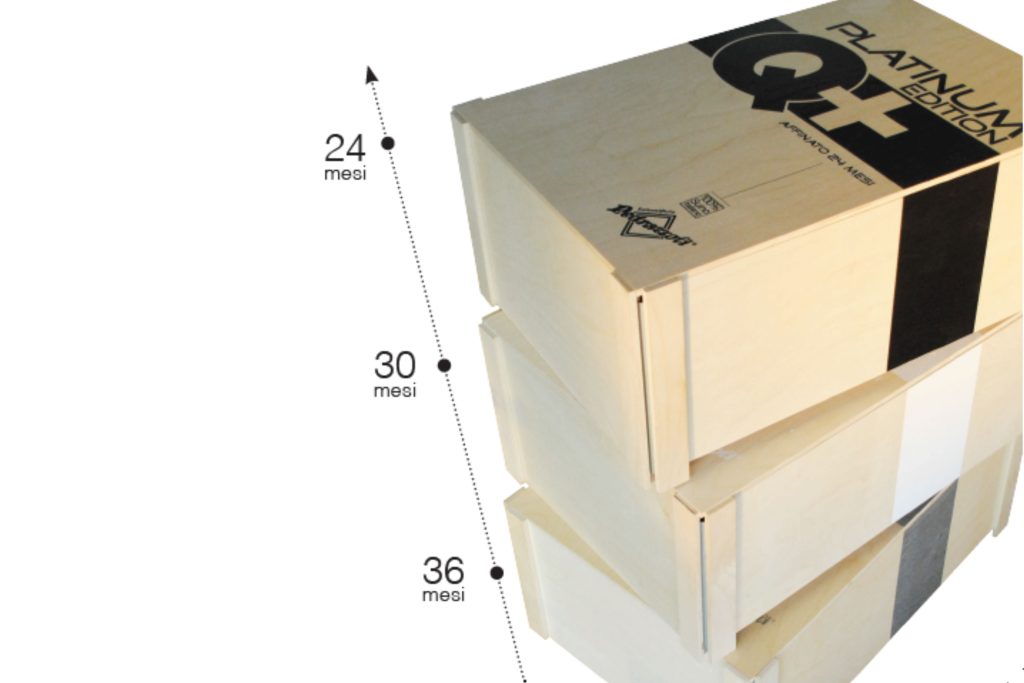
When included in a vertical ageing tasting — for example, comparing Parma 24 months, Parma 30 months and Parma 36 months — this tasting method becomes even more interesting, because it allows us to observe how each stage of maturation gradually transforms the ham, changing its appearance, texture, aroma and aromatic development.
How a Vertical Ageing Tasting Works
| Tasting phase | What to observe or do | What it reveals about the ham | In the 24 / 30 / 36 month vertical tasting |
|---|---|---|---|
| Tasting order | Start with the youngest ageing period and move towards the longest one. | This allows the palate to read the evolution progressively, without the more intense profiles overwhelming the more delicate ones. | 24 months → 30 months → 36 months |
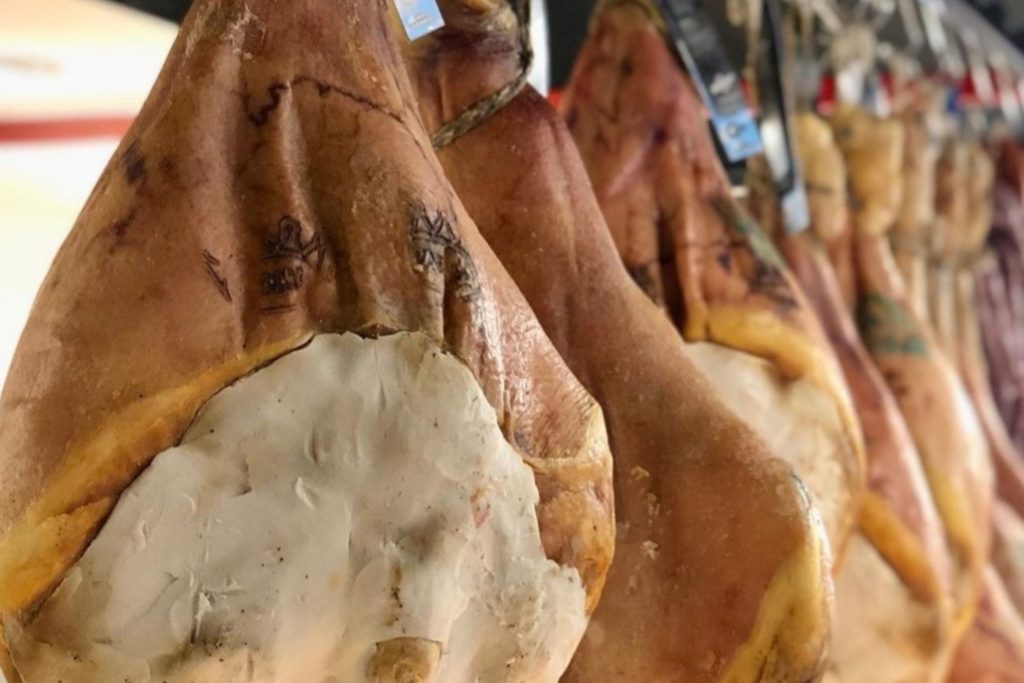
| Observation of the whole ham | Evaluate the shape, the visual balance between lean and fat parts, and the overall appearance. | A harmonious shape, with the typical “pear” silhouette, together with compact, light-coloured outer fat, anticipates the balance of the product. | This first visual step already helps identify quality and proper maturation. |
| Preparation for slicing | Observe the fat and the colour of the meat after cutting. | The fat should appear white, with slight pinkish veining; the meat should have a uniform pinkish-red colour. | It shows how ageing progressively influences the appearance of the product. |
| Analysis of the slice | Evaluate moisture, texture and the distribution of the fat component. | The slice should not be shiny, but slightly moist, soft and well-balanced in its fatty part. | It helps assess structure and pleasantness on the palate across the different maturations. |
| Olfactory examination | Smell the slice before tasting it. | The aroma should be fragrant, delicate, sweet and harmonious, with clear notes of aged meat. | As the ageing period increases, the aromatic profile can become broader and deeper. |
| Tasting | Let the slice involve the whole mouth, tasting it slowly. | Sweetness, light savouriness, perceived freshness and overall balance emerge during this phase. | The comparison between 24, 30 and 36 months makes the evolution of flavour much more evident. |
| Evaluation of structure | Pay attention to the resistance during chewing. | A good Prosciutto Crudo should be tender, soft and melt-in-the-mouth. | The structure changes with maturation and contributes to the personality of each ageing period. |
| Retro-olfactory perception | After swallowing, close the mouth and exhale through the nose. | This makes it possible to perceive intensity, persistence and final aromatic development. | This is where the increasing depth between 24, 30 and 36 months becomes most clearly noticeable. |
| Overall reading of the vertical tasting | Compare the sensations collected across the three stages of maturation. | Ageing progressively changes appearance, texture, aroma and persistence. | The vertical tasting reveals three different expressions of the same product, guided by time. |
Tasting with Awareness
A vertical tasting of cured hams is also an exercise in mindful tasting. It teaches us to pause on details, to recognise differences that often go unnoticed in a quick consumption experience, and to give value to the slowness of tasting.
In today’s gastronomic context, where food culture and experience are increasingly central, this type of tasting gives greater depth to the act of eating. It does not turn Prosciutto Crudo into something distant or complicated. On the contrary, it helps us understand it better, respect it more and enjoy it with greater attention.
This is why a vertical tasting is not only a technical tasting experience, but also a way to approach the product with curiosity and sensitivity, recognising ageing time not as a secondary detail, but as a central part of its identity.
The Vertical Tasting of Cured Hams as a Product Story
Speaking about a vertical tasting of cured hams also means speaking about language, gastronomic culture and the ability to tell the story of a product in a deeper way.
It is a format that combines tasting and narration, sensory concreteness and reflection.
On the one hand, the tasting experience allows us to perceive real and immediate differences. On the other, it helps build a richer story around Prosciutto Crudo, one that does not stop at the simple pleasure of taste, but opens up to the themes of craftsmanship, evolution and time.
For a company such as Pedrazzoli, this perspective is particularly interesting because it enhances the product and places it at the centre as an object of knowledge, experience and culture.
Conclusion
The vertical tasting of Prosciutto Crudo is a tasting experience inspired by the world of wine and translated into the language of charcuterie.
Tasting Prosciutto Crudo in three different ageing periods makes it possible to better understand its evolution and to appreciate the decisive role of time in the construction of flavour.
It is an experience that only appears simple. In reality, every taste opens up a further level of interpretation: the freshness of the younger stages, the harmony of the intermediate ones, the depth of longer maturations.
Three different moments, three ways of expressing the same product.
And this is where the vertical tasting of cured hams finds its most authentic meaning: not in comparison for its own sake, but in the possibility of looking at Prosciutto Crudo with greater awareness, recognising all its expressive richness.
Conclusion
The vertical tasting of Prosciutto Crudo is a tasting experience inspired by the world of wine and translated into the language of charcuterie.
Tasting Prosciutto Crudo in three different ageing periods makes it possible to better understand its evolution and to appreciate the decisive role of time in the construction of flavour.
It is an experience that only appears simple. In reality, every taste opens up a further level of interpretation: the freshness of the younger stages, the harmony of the intermediate ones, the depth of longer maturations.
Three different moments, three ways of expressing the same product.
And this is where the vertical tasting of cured hams finds its most authentic meaning: not in comparison for its own sake, but in the possibility of looking at Prosciutto Crudo with greater awareness, recognising all its expressive richness.